The Hidden History of Public Executions in Edinburgh

Edinburgh is a city of extraordinary beauty, from its castle perched high on volcanic rock, to its skyline punctuated by gothic spires. Its closes and wynds are steeped in centuries of history.
But look closely and you'll see that beauty and darkness have always walked hand in hand here. For hundreds of years, the streets of Edinburgh's Old Town were the stage for one of history's most grim rituals: the public execution. From the gallows to the Maiden, Edinburgh's authorities were ruthless in their pursuit of justice (or what passed for it), and the city's population were only too eager to bear witness, with crowds often reaching into the thousands.
Today this history is mostly forgotten but traces remain, hidden in plain sight in everyday locations across the city. Read on for a potted history of the key sites, characters and stories associated with this dark aspect of Auld Reekie...
A Powerful & Deliberate Spectacle...
Public execution in medieval and early modern Edinburgh was never simply about punishment. It was a carefully choreographed display of power, authority and social control. In a city where most could not read, laws were proclaimed aloud and the scaffold served as a living warning - a visceral lesson in what happened to those who challenged the crown, the kirk, or the social order. Justice had to be seen to be believed, and the larger the crowd, the more effective the message.
Edinburgh’s use of public executions is likely as old as the city itself. One of the earliest documented occurred in 1384, when several men were put to death at the Mercat Cross. From the outset, executions were woven into the city’s public spaces such as market squares, thoroughfares and gateways. They transformed familiar, everyday places into temporary stages of terror and control. Over the centuries that followed, these sites multiplied, shifted, and acquired their own grim reputations.
Edinburgh's Execution Sites:
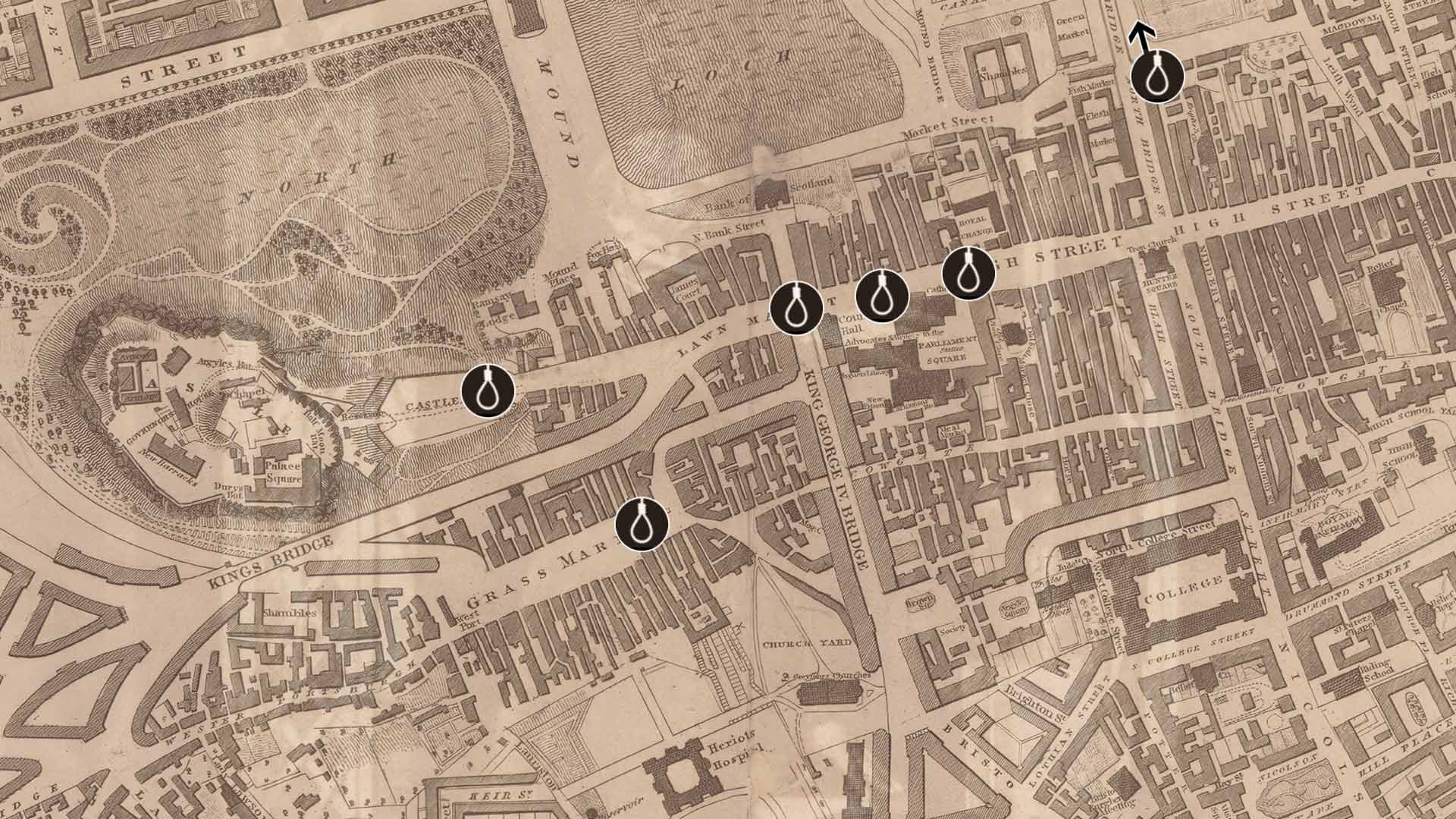
Public executions in Edinburgh were not confined to a single spot. They took place across a network of sites that changed over the centuries, each carrying its own dark associations. Executions took place both in bustling civic centres and in more liminal places on the city's fringes.
The main venues included the Grassmarket, multiple locations along the Royal Mile, the Gallowlee near Leith Walk and Edinburgh Castle's Esplanade.
The Grassmarket
The most famous of all was the Grassmarket, the long market square that sits in the shadow of Edinburgh Castle. Between 1660 and 1784, this was the city's principal place of execution, where a permanent gallows stood at the eastern end of the square. The condemned would be processed from the Tolbooth Prison in a solemn procession down the Royal Mile before arriving at the scaffold to meet their end before a crowd that could number in the thousands packing the square and leaning out of the windows of the surrounding tenements to get a better view.
The Royal Mile
The Royal Mile, Edinburgh's main historic thoroughfare contained multiple locations used for public executions at various times. The Mercat Cross, standing close to St Giles' Cathedral, was one key venue. Traditionally a place of public proclamations and commerce, it also served as Edinburgh's stage for beheadings and sometimes hangings and burnings, particularly between the 16th and early 18th centuries.
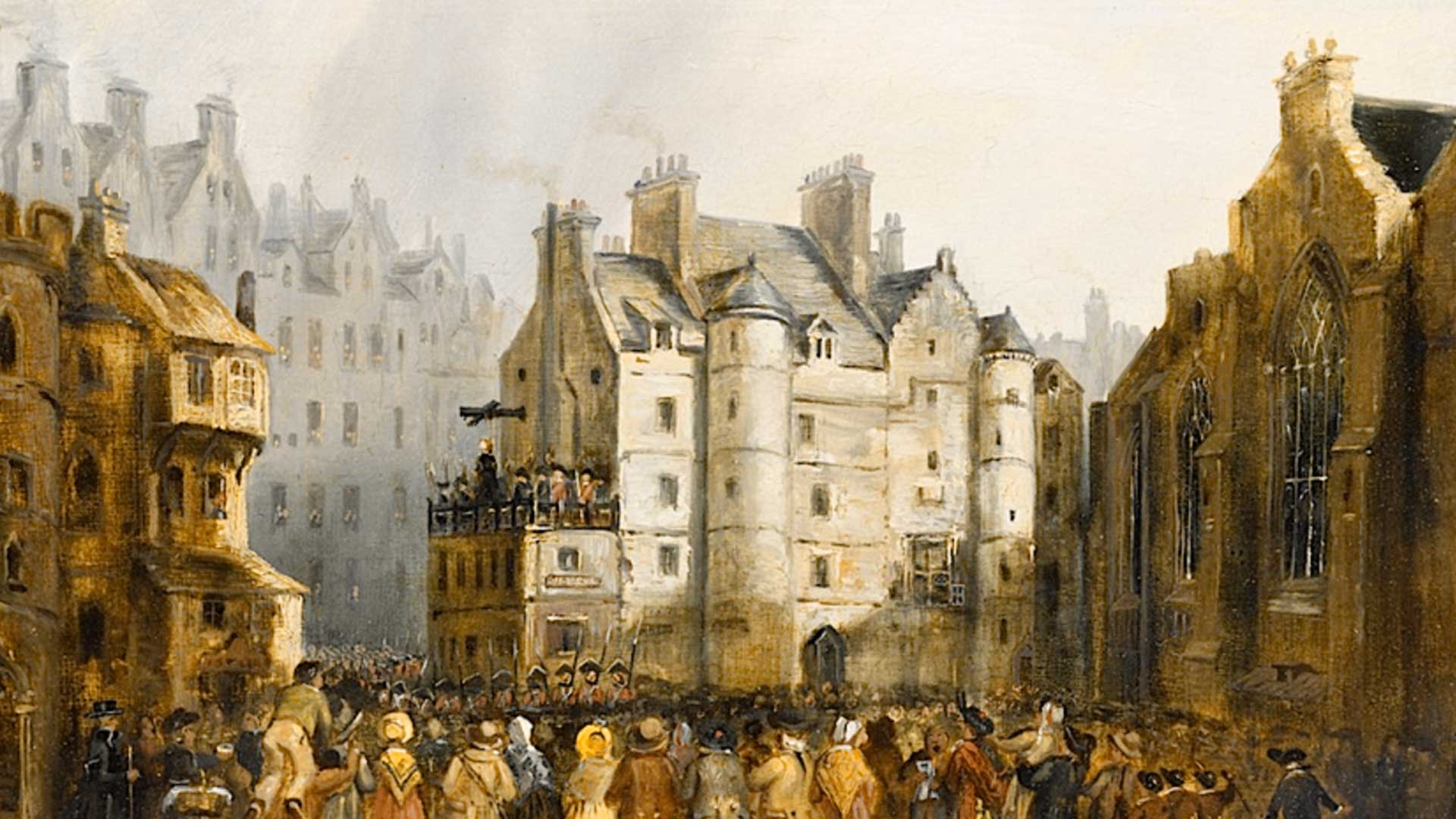
On the other side of St Giles', the infamous Edinburgh Tolbooth was another common execution spot. In 1785 a purpose built platform was constructed, two storeys up on its western facade to ensure a better view of the gallows. This 'improvement' was rumoured to have been designed by the infamous Deacon Brodie who would later meet his end in this very spot. Find our more about his fascinating story in our Deacon Brodie Escape Room.
Slightly further up the Royal Mile was another sometimes-used gallows site on the Lawnmarket by the present-day junction with George IV Bridge. The precise spot is commemorated with a small plaque and brass cobbles.
The Gallowlee
A lesser-known site, but one of the city's oldest, was the Gallowlee, roughly half way down what is today's Leith Walk, at Shrubhill. Sir Walter Scott described it as used for the most serious criminals, who were sometimes 'hung in chains' there after being executed elsewhere. This post-mortem punishment was designed to maximise public humiliation while serve as a warning to all who passed on the main road from Edinburgh to the bustling port of Leith.
The Castle Esplanade
Another location was the patch of rough ground in front of Edinburgh Castle. Today the 'esplanade' has been paved over and hosts concerts and cultural events such as the Military Tattoo. In the 16th and 17th centuries the specticale was far more bleak - convicted witches were burned in this wind-swept spot at the top of the Royal Mile.
Lesser Known Execution Sites
These were the main locations but they were far from the only ones. There are occasional references to public gateways such as the Netherbow Port being used, as well as open green spaces such as Calton Hill. Sometimes the nature of the crime itself would determine the place of execution. For example, pirates met a fitting end on the gibbet at Newhaven Docks, while highwaymen were sometimes executed on the arterial roads leading out of the city. The choice of venue served both a symbolic and practical purpose as a fitting deterrent for would-be criminals.
Edinburgh's Methods of Execution:
The Gallows: The Default Preference
Throughout Edinburgh's history, hanging was by far the most common method of execution used. Cheap, (relatively) quick and (usually) effective, it was the city's go-to method of dispatching its criminals. The condemned would have a rope placed around their neck before being dropped from a height. A swift break of the neck was usually the intended result, but a slow strangulation was also likely.
Gallows mechanisms became somewhat more elaborate over time, from the humble ladder and gibbet to platforms incorporating trapdoors and space for multiple criminals to face justice simultaneously.
Depending on the period, Edinburgh had several permanent or semi-permanent gallows sites, with others erected as and when the need arose. Hanging also benefited from the creation of an obvious spectacle, with the condemned hoisted high in the air, his fate visible for all to witness.
The Maiden: Edinburgh's Guillotine
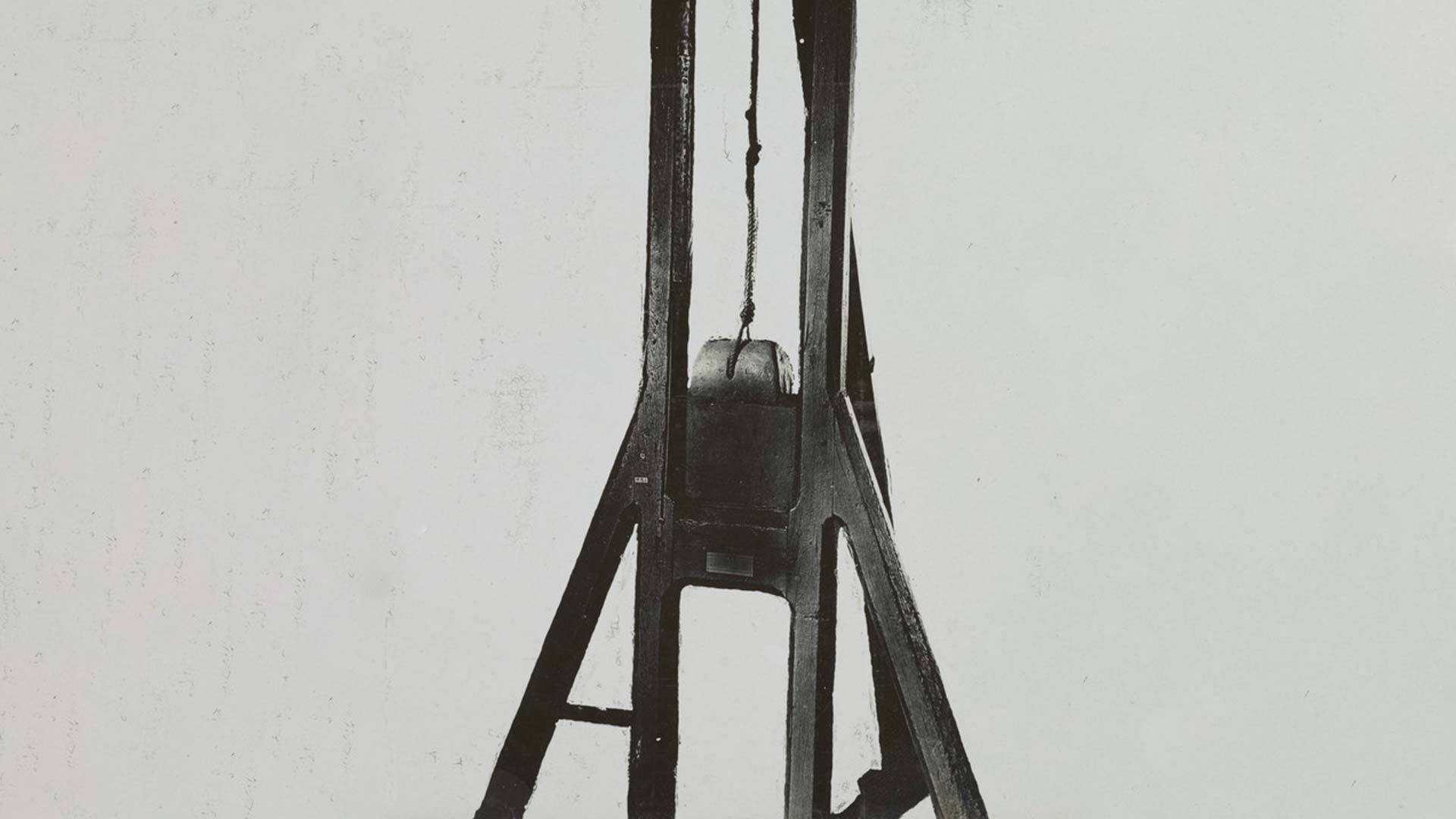
Long before France made the guillotine infamous during its Revolution, Edinburgh had its own beheading machine: The Maiden. Built in the mid-16th century, the Maiden was a fearsome device constructed primarily from oak, fitted with a flat iron blade weighted with lead. It was designed for portability and could be dismantled and transported between execution sites across the city at relatively short notice.
The maiden replaced manual beheading by axe or sword - a long-favoured way of dispatching the city's wealthier residents and nobility. This was physical work prone to human error, and could get messy. Edinburgh liked to think of itself as an enlightened place, and beheading machines were thought of as a faster and more humane alternative.
Between 1564 and 1710, over 150 people were executed using the Maiden, many of them at the Mercat Cross. Its victims ranged from convicted criminals to political figures caught on the wrong side of history. Among the most notable was James Douglas, 4th Earl of Morton, ironically the very man who had first brought the device to Scotland from Europe. He was executed by the very machine he had championed, in 1581.
The Maiden still exists. Today it is on display at the National Museum of Scotland on Chambers Street - one of the most startling objects in Edinburgh's remarkable collection of historical artefacts. If you find yourself in Edinburgh looking for a genuinely haunting experience, it is well worth seeking out.
Burning at the Stake: Fire as Purification
Burning at the stake was the most viscerally symbolic of Edinburgh’s punishments. It was a sentence reserved for crimes that were seen not merely as illegal, but morally polluting: heresy, witchcraft, and the kind of spiritual treason that authorities believed threatened the entire community. Fire was thought to be cleansing. It did not simply kill but destroyed, and in the process, purified. On Castlehill, within sight of the fortress that embodied royal power, the state made a brutal theatre of moral certainty: this is what becomes of those who consort with the Devil, undermine the kirk, or step outside the bounds of acceptable belief.
Burning was a process rather than a single act. First, a stake had to be erected and a surrounding fire constructed with materials brought in from the surrounding countryside - wood, coal and tar were all commonly used.
In Scotland, the condemned were typically (but not always) granted the small mercy of strangulation first. Their body then consigned to the flames as a final denial of dignity, and, in the popular imagination, a barrier against any supernatural return.
Among the best-documented cases is that of Agnes Sampson, implicated at the centre of the North Berwick witch trials: her execution is recorded at Castle Hill on 28 January 1591, with the method explicitly noted as “Strangle & Burn.”
Punishment Beyond Death
Death was not always the end of the sentence. Edinburgh, like many European cities, believed that some crimes were so serious, that punishment should continue after life had left the body. The point was never simply to kill: it was to exert social control. Post-mortem penalties turned the corpse into a civic sermon. A criminal might be hung in chains (gibbeted) at a place like the Gallowlee, or their head impaled on a pike at the Tolbooth so passers by couldn't help but bear witness. This final humiliation could extend into weeks, months or longer.
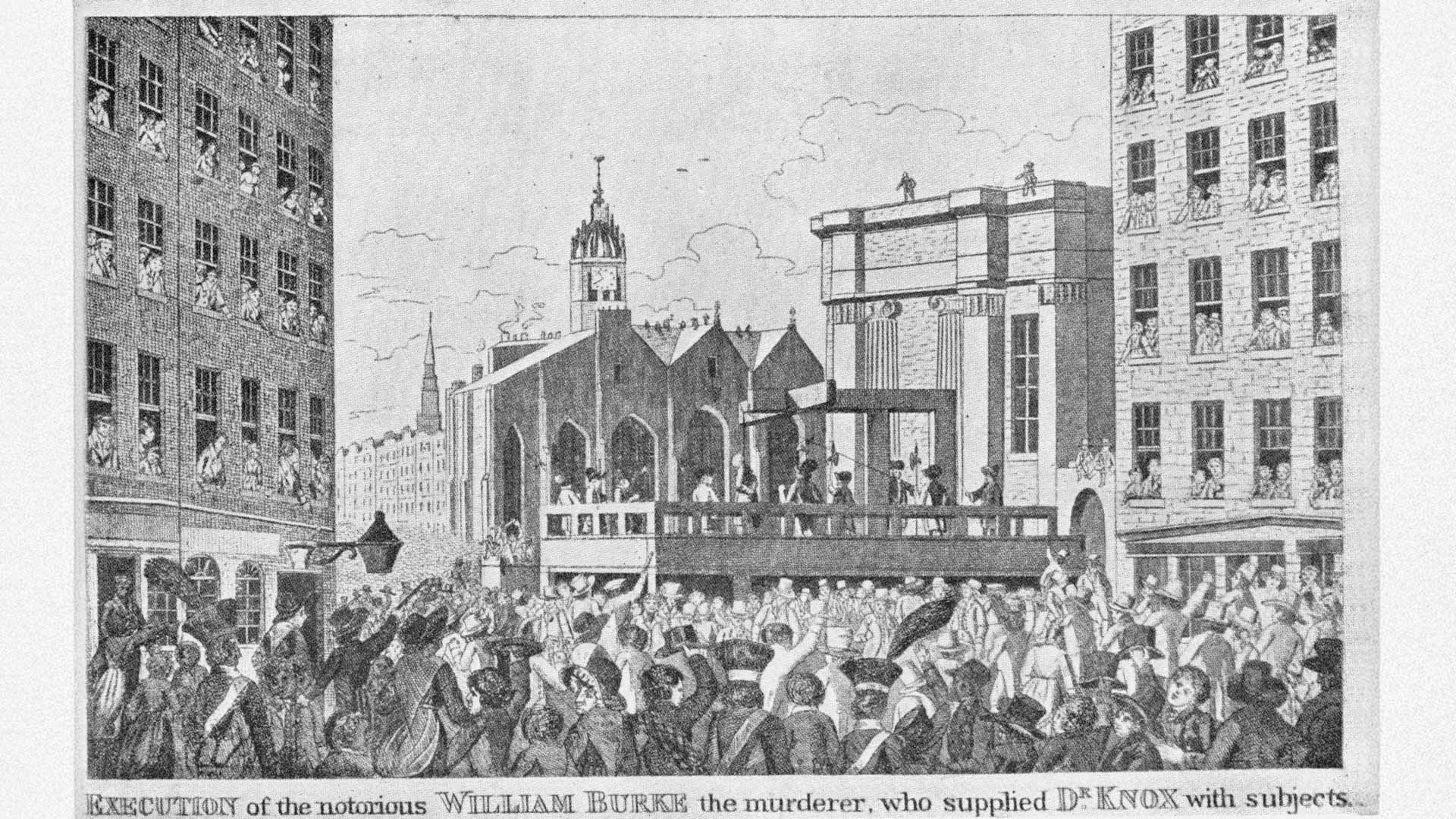
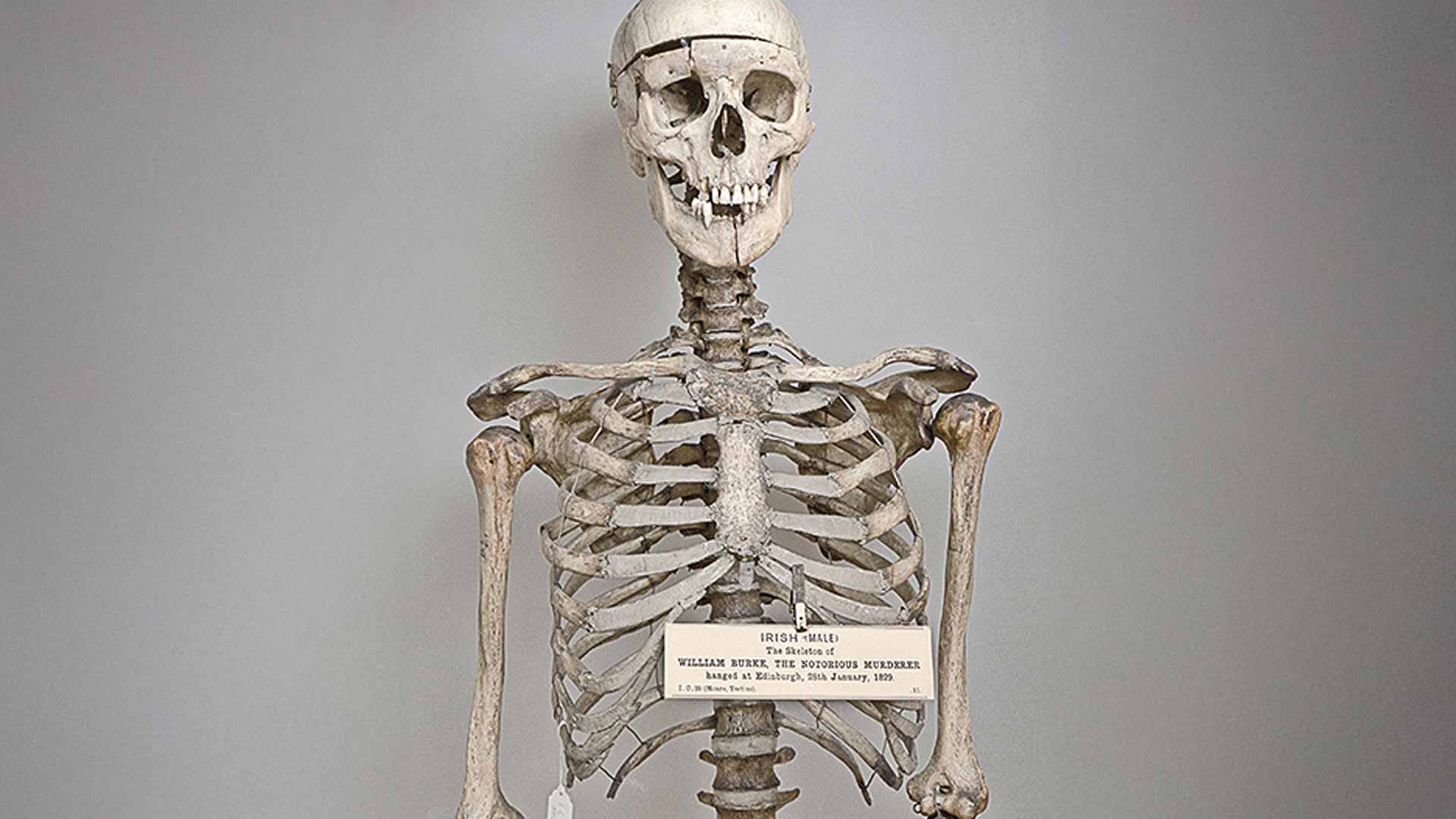
In later years, the afterlife of punishment meant public dissection. In an era when anatomy schools were hungry for bodies, the law increasingly weaponised dissection as a second penalty: a fate that attacked the idea of bodily integrity after death and, to many, threatened the hope of a “proper” Christian burial and the promise of a subsequent resurrection. The case of William Burke, executed in January 1829, is a stark example: his body was publicly dissected in Edinburgh's medical school as part punishment, part spectacle and part poetic justice (his victims had themselves been sold for dissection). Burke's anatomised remains were used to bind books and furnish exhibits at Surgeon's Hall and Edinburgh University's Anatomy Museum where they remain to this day.
The Condemned: Who were they?
Those executed in Edinburgh were overwhelmingly drawn from the lower ranks of society. The typical condemned person was male, young or middle-aged, and poor. They were labourers, servants, sailors, apprentices, vagrants and the marginalised who lived precarious lives in a crowded and unequal city. Many were held in Edinburgh's Old Tolbooth Prison while awaiting their fate.
Wealth, education and social standing did not make one immune from execution, but they strongly shaped how likely a person was to reach the scaffold and how they were punished if they did. Elite offenders were more likely to receive beheading, pardons, exile or commutation, while the gallows disproportionately claimed those with the fewest resources or connections.
Violent crime, particularly murder, was consistently the most reliable route to the scaffold across the centuries. However, early modern Edinburgh also executed people for offences that seem astonishingly minor today. Property crimes such as burglary, theft, robbery and horse-stealing carried the death penalty for much of the 16th, 17th and 18th centuries. The logic was deterrence: protecting property was seen as essential to maintaining social order in a commercial city.
Women formed a minority of those executed, but they were disproportionately targeted for certain crimes such as witchcraft, infanticide, and other 'moralised' offences.
How many people were executed in Edinburgh?
The death toll from Edinburgh's entire history of public executions is difficult to discern. Surviving records are uneven, particularly for the medieval period, and many early executions were recorded only briefly (if at all) in official accounts. The total is likely to hang somewhere in the high hundreds or low thousands.
Executions in Edinburgh occurred steadily over several centuries, punctuated by intense spikes during periods of religious and political upheaval.
In a broader context, Scotland as a whole made comparatively restrained use of the death penalty when set against many European neighbours. Scottish courts exercised wide discretion, frequently commuting death sentences to banishment, transportation or imprisonment, particularly from the 18th century onwards.
What was it like to attend an execution?
A Festival of Justice
One of the most unsettling aspects of Edinburgh’s executions is how easily punishment and entertainment could share the same cobbles.
These were civic events, often with a lively, almost festive atmosphere. The date would be eagerly anticipated, crowds would assemble early as windows and stairwells became grandstands.
The city’s street life re-formed around the scaffold as if it were a fair. There was food, drink and opportunities for commerce. Children were often encouraged to attend as a moral lesson. Printed “last words”, ballads, and cheap moral literature circulated around executions, feeding the crowd’s appetite for drama, repentance, or scandal.
Public Participation
Public executions were not simply passive spectacles. Heckling, jeering and shouted prayers were common, especially if the condemned was unpopular or perceived as unrepentant.
Yet the same crowd could just as easily turn sympathetic. Contemporary accounts describe moments when voices rose to drown out an execution sermon, or when the condemned was offered drink, words of comfort, or even physical assistance as the sentence was carried out. At some hangings, friends or family would cling to the condemned’s legs once they were suspended at the gallows, adding physical weight to hasten death and lessen suffering.
Once the sentence was complete, public involvement continued. Bodies were sometimes claimed immediately by relatives, especially if burial rites were at stake, while in other cases crowds surged forward to touch the corpse, cut away pieces of rope as talismans, or simply confirm for themselves that justice had truly been done.
Rioting & Unrest
The scaffold was meant to draw a clear line between authority and the masses, but in practice it was less straightforward. Wherever crowds gathered in Edinburgh, unrest was never far away. The city's "mob" was infamous and its history is peppered with moments when punishment and public anger collided. Perhaps the condemned was believed to be innocent or their execution in some way botched by the authorities. In these instances a spectacle intended to project order sometimes revealed how thin official control really was.
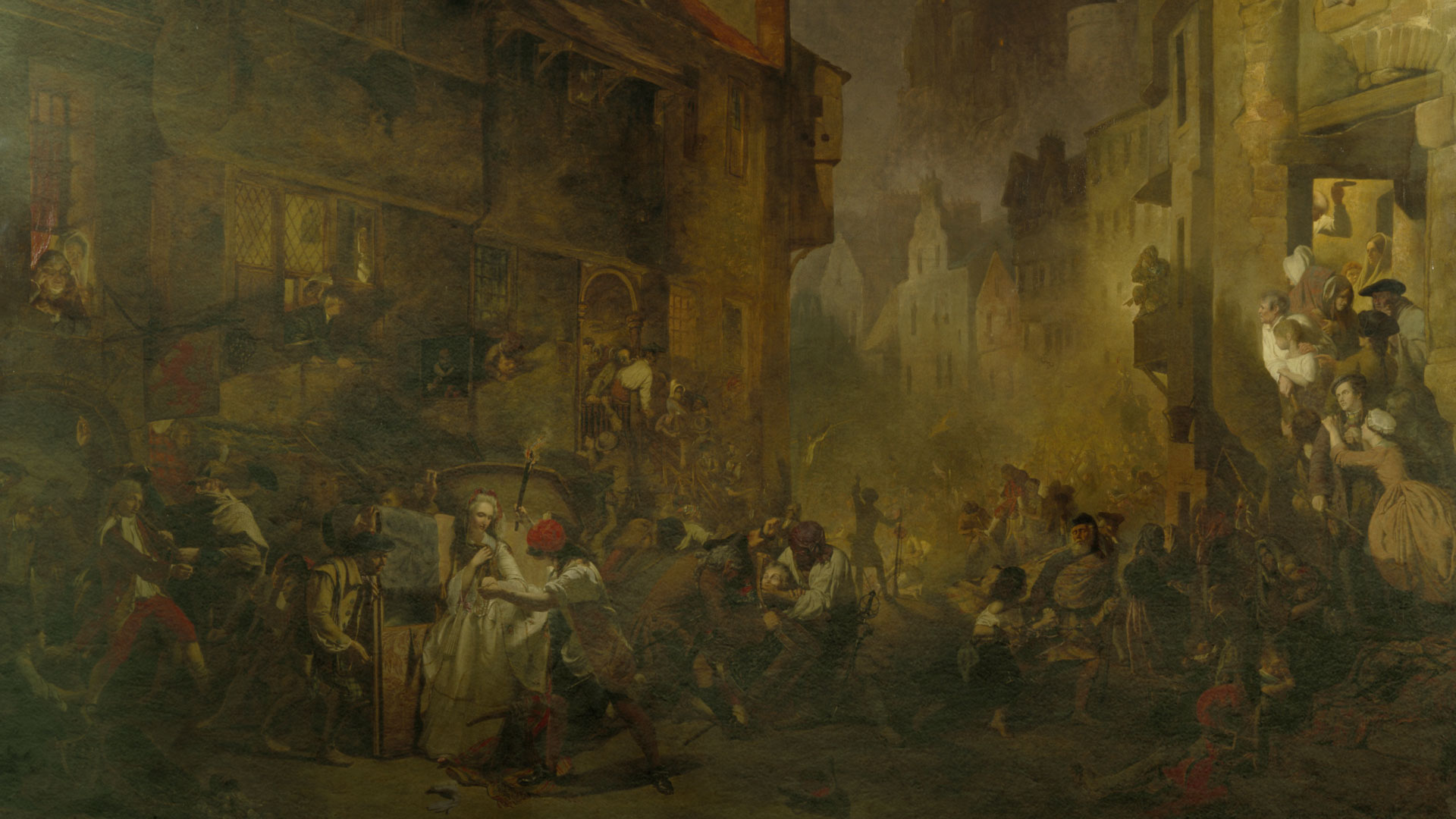
A dramatic example took place in 1736. After Captain John Porteous of the City Guard ordered his men to fire on a restless crowd during a public hanging in the Grassmarket, killing several spectators, he was himself tried and sentenced to death. When the sentence was later commuted, Edinburgh's population erupted. A lynch mob seized him from the Tolbooth Prison and summarily hanged him from a dyer’s pole in the Grassmarket - an episode which became known as the Porteous Riot.
A later example was the events following the execution of Andrew Wilson in 1774. Wilson was sentenced to have his body dissected after death but a sympathetic crowd had other ideas. They rushed the scaffold and attempted to rescue the body from the awaiting surgeons, leading to days of unrest known as the Edinburgh Anatomy Riot.

The Executioner: A Necessary Outcast
At the centre of every execution stood one man - the executioner (and as far as we can tell, in Edinburgh it was always a man). Here was a figure essential to the city's justice system, yet deeply despised by its population. In Edinburgh, executioners were civic employees, paid by the town council, often on a per-execution basis supplemented by retainers for maintaining gallows, ropes and equipment in the interim. Payment records show that fees could vary depending on the method used, with beheadings and burnings sometimes commanding higher sums than simple hangings.
Contrary to the dramatic image of a hooded figure in black robes, there is no firm evidence that Edinburgh’s executioners wore a distinctive “uniform” as a matter of course. In early modern Scotland, executioners were usually dressed much like other working men of the time.
Despite their official status, executioners occupied one of the lowest rungs of social respectability. They were feared, hated and often shunned - barred from guild membership, and forced to live on the margins of the city’s social life. Many executioners inherited the occupation, passing it down through families who found themselves trapped in the role by necessity and stigma alike.
The Church: God's Representative on the Scaffold
The Church played a central and highly visible role in Edinburgh’s executions, acting as both moral authority and spiritual enforcer. Ministers would typically have visited the condemned in advance, perhaps on multiple occasions, before accompanying them on their final walk to the scaffold, leading prayers, urging repentance, and delivering sermons intended as lessons for the watching crowd.
These moments reinforced the idea that execution was not merely a legal act, but a divinely sanctioned one. In cases involving heresy or religious dissent, such as those of the Covenanters or accused witches, the Church’s influence could be decisive, pressing for punishment even when secular authorities hesitated. The scaffold, like the pulpit, became a place where doctrine, obedience and fear of God were publicly affirmed.
Stories from Edinburgh’s Long History of Executions...
The Covenanters: Religion and the Gallows
Few chapters in Edinburgh's execution history are as charged with political and religious significance as the fate of the Covenanters. During a period known as 'The Killing Time' (roughly from 1661 to 1688), over one hundred men and women were executed in the Grassmarket for refusing to renounce their Presbyterian faith and accept the authority of the king over that of the Church of Scotland.
These were not criminals in the conventional sense. They were people who believed, often with absolute conviction, that their religious conscience took precedence over royal command. That conviction brought them to the gallows in droves. The Duke of Rothes famously quipped of one such believer who refused to recant, 'Then let him glorify God in the Grassmarket.' Many did.
A memorial to over 100 Covenanters who were put to death was erected in the Grassmarket in 1937, and stands today near the former site of the gallows. A shadow of the gibbet itself has been worked into the paving as a subtle but powerful reminder of what once took place in this bustling public square.

'Half-Hangit Maggie': When the Gallows Failed
Not every execution went as planned. One of Edinburgh's most extraordinary stories belongs to Margaret Dickson, known to history as 'Half-Hangit Maggie' - a fishwife from Musselburgh who was hanged in the Grassmarket in August 1724 after being convicted of causing the death of her illegitimate newborn child.
After the hanging, a doctor declared Dickson dead, and her body was claimed by her family. As the cart carrying her coffin made its way back to Musselburgh, however, her relatives heard an inexplicable knocking from the inside. Maggie Dickson was very much still alive. Under Scots law, as the sentence had technically been carried out she could not be executed again for the same crime. She went on to live for decades longer.
The case prompted a change in Scottish legal wording: death sentences thereafter specified execution 'until dead'. Today, a pub in the Grassmarket is named in her honour: 'Maggie Dickson's', a fitting tribute to one of Edinburgh's most improbable survivors.
Deacon Brodie: Respectability on the Gallows
William Brodie embodied one of Edinburgh’s favourite contradictions. By day, he was a respected cabinetmaker and Deacon of a powerful trade guild; by night, a burglar who used his clients’ keys to rob their homes. His double life collapsed in 1788, and he was hanged on the execution platform at the Tolbooth Prison - a structure he was rumoured to have had a hand in designing.
Brodie’s crimes apaled the authorities and enraged the city yet Brodie is said to have kept his poise and gentlemanly demeanour right to the end - smiling and joking on the scaffold. This, in part, fuelled rumours that he evaded death by way of a steel contraption concealed within his shirt collar. While almost certainly without merit, his life story would later inspire Robert Louis Stevenson’s Dr Jekyll and Mr Hyde, turning a real character into a lasting symbol of Edinburgh’s divided soul.
Learn more about his fascinating story in our Deacon Brodie escape room.
Britain's Last Execution for Blasphemy
Some executions in Edinburgh's history stand out not for their drama but for the sheer injustice they represent by modern standards. Thomas Aikenhead was a young University of Edinburgh student, probably around 20 years old, when he was charged under the Blasphemy Act for making sceptical remarks about Christianity to fellow students. In January 1697, he was hanged at the Gallowlee, making him the last person executed for blasphemy in Britain.
Aikenhead's case is shocking because of its combination of youth, the trivial nature of the offence, and the institutional weight that bore down upon him. The Church of Scotland pressed hard for his execution even as his death warrant was being considered, and despite appeals for clemency, the law ran its course. His story is a reminder that Edinburgh's execution history is not simply one of criminals meeting justice, but of the ways in which power, religion, and the law could conspire with devastating effect.
The End of Public Execution: Edinburgh's Last Hanging
By 1784, the last hanging took place in the Grassmarket, and the focus of public execution shifted to a platform erected on the west gable of the Old Tolbooth Prison on the High Street. The shift mirrored wider changes across Britain, as authorities attempted to bring more order and solemnity to what had often been chaotic public spectacles.
The final public execution in Edinburgh took place on 21st June 1864, at the corner of George IV Bridge and the Lawnmarket, where George Bryce was hanged for the murder of Jeannie Seaton. The execution became notorious for all the wrong reasons. Bryce was dropped a mere two feet - far too short for a clean break of his neck and the crowd of thousands watched in mounting horror at his slow strangulation. The botched execution caused a riot, with the crowd turning on officials. The incident accelerated the end of public executions in Scotland. Just four years later, the Capital Punishment Amendment Act 1868 moved all executions inside prison walls.
Hangings continued in places such as Calton Jail and later Saughton Prison, carried out in private before a handful of officials, doctors and clergy. The removal of executions from public view marked a profound shift in how justice was conceived: punishment was no longer a communal spectacle but an administrative procedure. For some contemporaries, this loss of visibility provoked unease, yet for others, it signalled a society beginning, however imperfectly, to turn away from the brutal theatre that had once defined Edinburgh’s streets.
On 23 June 1954, George Alexander Robertson was executed at Saughton Prison for murder. A final, private punctuation mark to a tradition that had once been staged in the open air of the Grassmarket and the High Street. Contemporary newspaper reporting makes clear the tone of the mid-20th century: execution was no longer civic theatre, but an administrative act reported at a distance and, increasingly, questioned on moral grounds.

Where to Find Edinburgh's Execution History Today
The dark history of Edinburgh's executions is everywhere, if you know where to look. The shadow of the Grassmarket gibbet is worked into the paving near the Covenanters' Memorial. The Maiden stands in the National Museum of Scotland on Chambers Street. Brass plates mark the site of the city's final public hanging at the Lawnmarket.
If you want to feel Edinburgh's dark history come alive around you, Escape The Past's City Trails and historical Escape Rooms offer an immersive way to connect with the city's most extraordinary, and most chilling, stories. Step inside Edinburgh's past - if you dare.