Who Was Dr Robert Knox? Edinburgh’s Anatomist

The Anatomist at the Dark Heart of Burke & Hare’s Edinburgh
Few figures embody Edinburgh’s dark past quite like Dr. Robert Knox.
If you’ve never heard of him, you’ve almost certainly heard of his two “suppliers”, William Burke & William Hare, whose 19th century spree of ‘murder for dissection’ ensured Knox’s name is now inseparable from one of the most infamous periods of Edinburgh’s history.
But who was Dr Robert Knox really? Who was this “Boy who buys the beef” (as an old Edinburgh nursery rhyme puts it).
Was Knox a scheming villain, an unwitting accomplice, or simply a man shaped and ultimately destroyed by the brutal realities of 19th-century medical science?
To understand Knox is to step into the shadowed streets of Old Edinburgh, into a world where bodies were currency, where fear and superstition walked hand-in-hand with enlightened progress, and where the dead weren’t always left to rest in peace.
Edinburgh in the Age of Anatomy
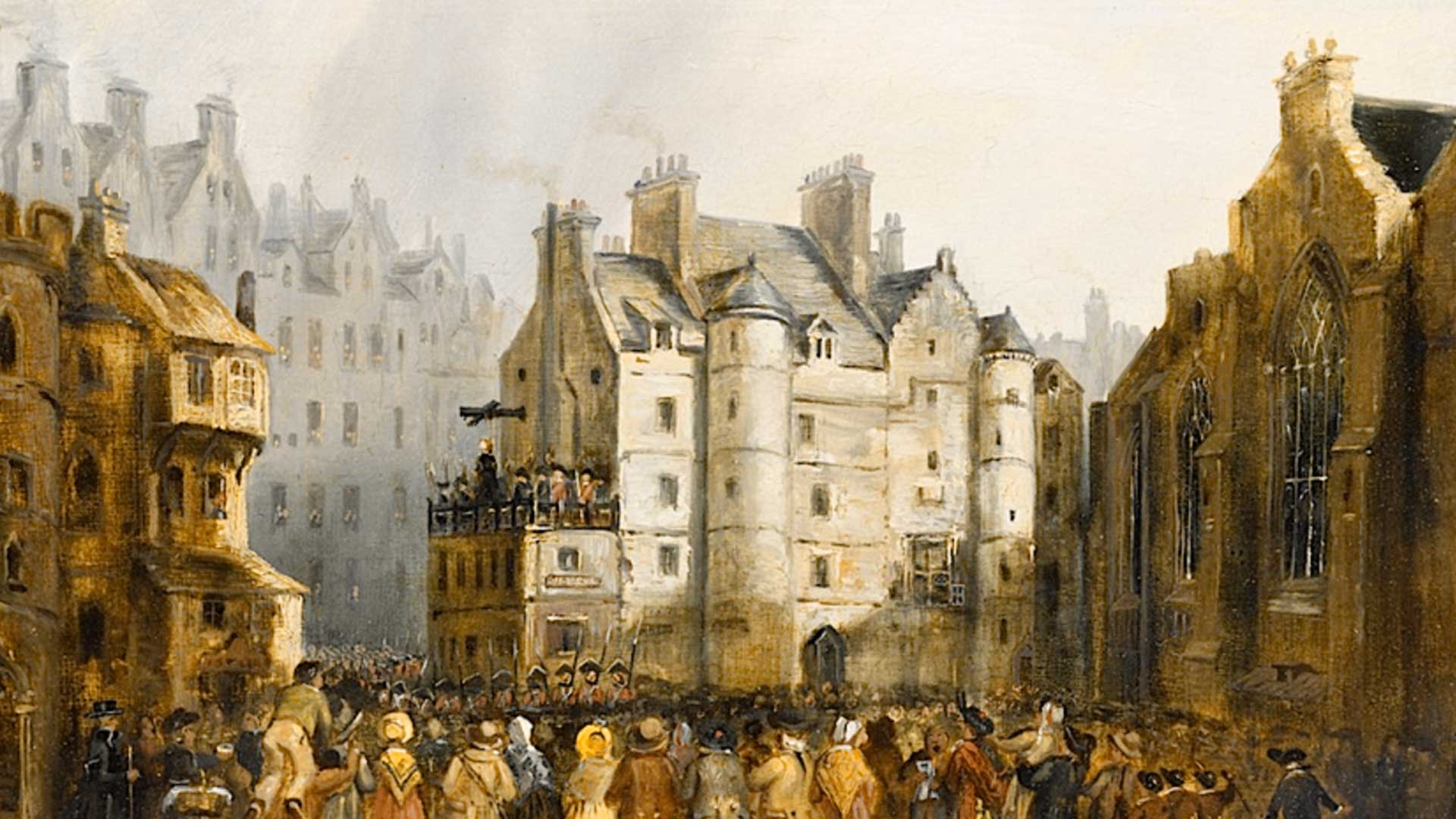
To understand Dr Robert Knox, you must first understand the world in which he lived. Early 19th-century Edinburgh was a booming centre of medical learning. Students travelled from across Europe to study anatomy at the university’s world-leading medical school.
But this pursuit of knowledge required bodies. Physical specimens for dissection in the name of teaching and research. And bodies were always in short supply.
At the time, the law permitted only the corpses of executed criminals to be ‘anatomised’. But executions were declining, and medical schools were expanding. The gap between supply and demand created a grotesque underground economy. Enter ‘the resurrectionists…
The very first resurrectionists (or grave robbers) were the anatomists and medical students themselves, but by the early 19th century an underclass of professional body snatching gangs had developed to supply the city’s anatomy schools with fresh corpses.
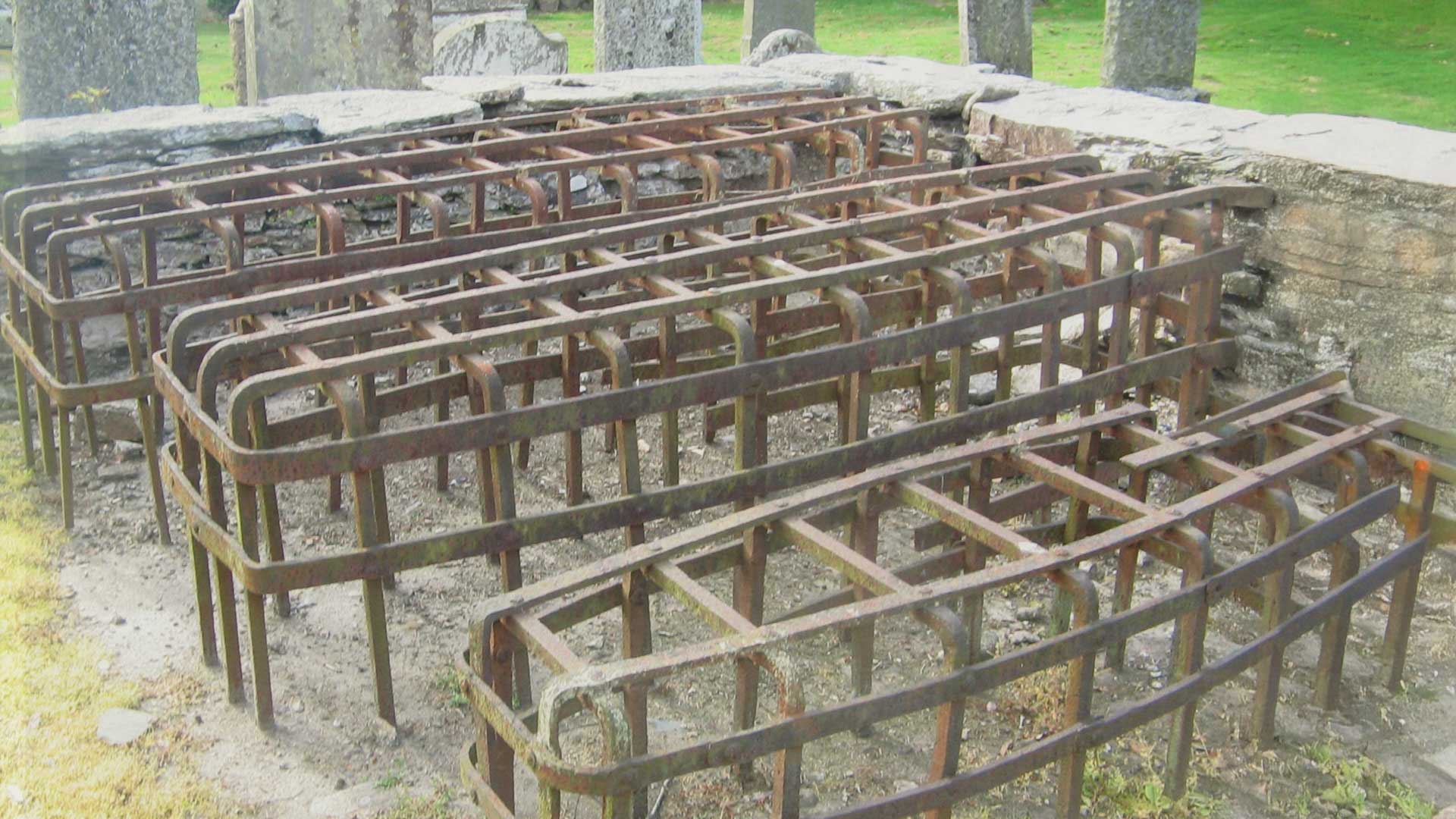
Fear of grave robbing was widespread. Families stood vigil over the recently interred. Watchtowers were erected in cemeteries and guards patrolled kirkyards at night. Iron cages and other elaborate contraptions were placed over sealed coffins. Yet despite these measures, the dead continued to be resurrected with alarming frequency.
Who Was Dr Robert Knox?
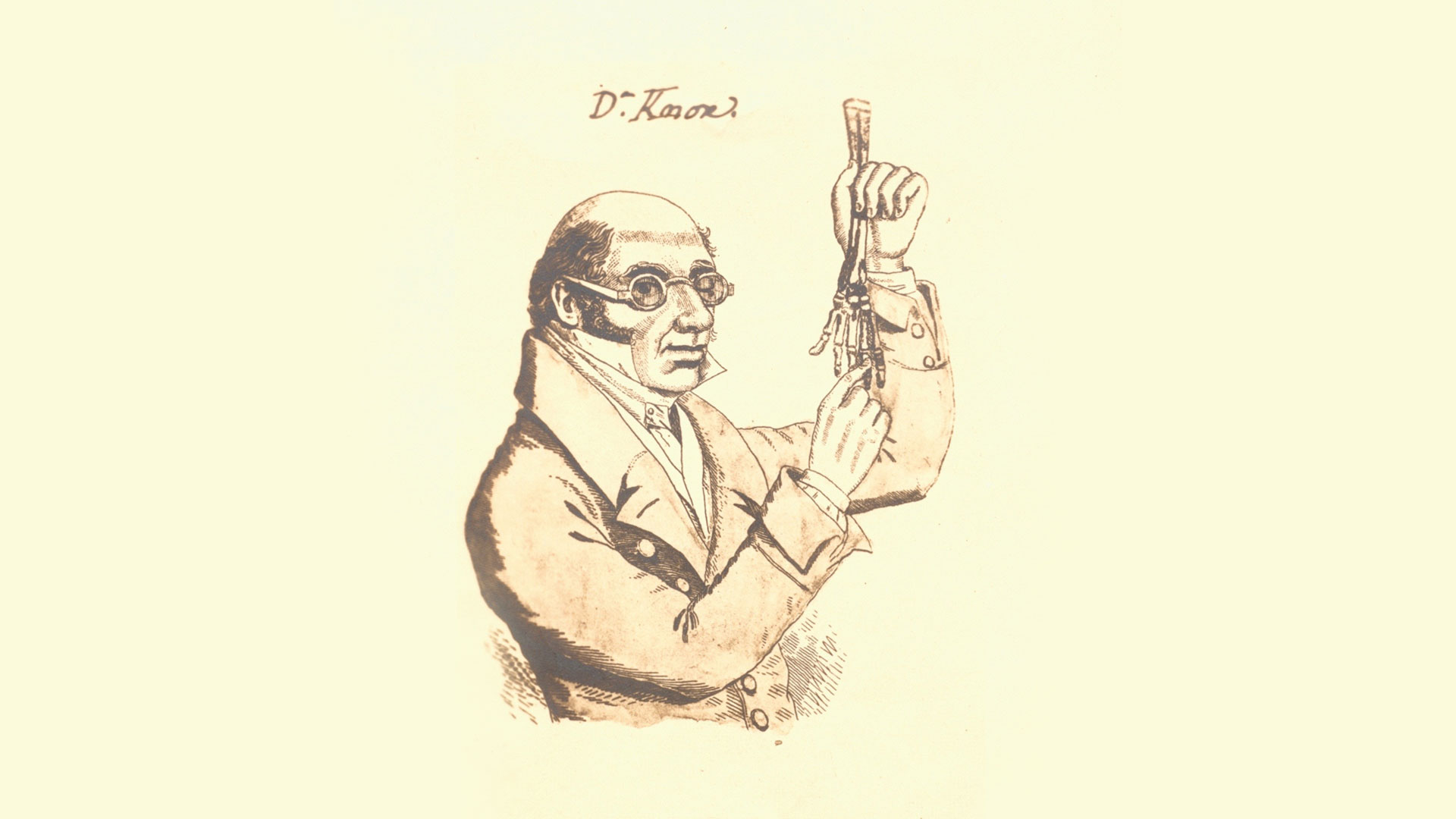
Dr Robert Knox was born in 1791 in Edinburgh. Brilliant, driven, and fiercely ambitious, he trained as a surgeon and served as an army doctor during the Napoleonic Wars. War hardened him. Death became familiar and experimentation became second nature.
When he returned to Edinburgh, Knox rapidly gained a reputation as one of the finest anatomical lecturers in Britain. His classes were theatrical, uncompromising, and brutally honest. Students packed into his lecture theatres, drawn by his charisma and flair as well as his surgical mastery.
His private anatomy school at 10 Surgeons’ Square rivalled that of the prestigious university. Many other extra-mural schools existed at the time and for competition for students was fierce. Like his neighbouring anatomists, Knox needed fresh bodies and many of them. His ambition was such that he would ask few questions about their origin.
Burke and Hare Enter the Story
In 1827, two Irish labourers living in Edinburgh’s West Port district discovered something terrible and terribly profitable. William Burke and William Hare learned they could sell a dead body for more money than a working man could earn in months!
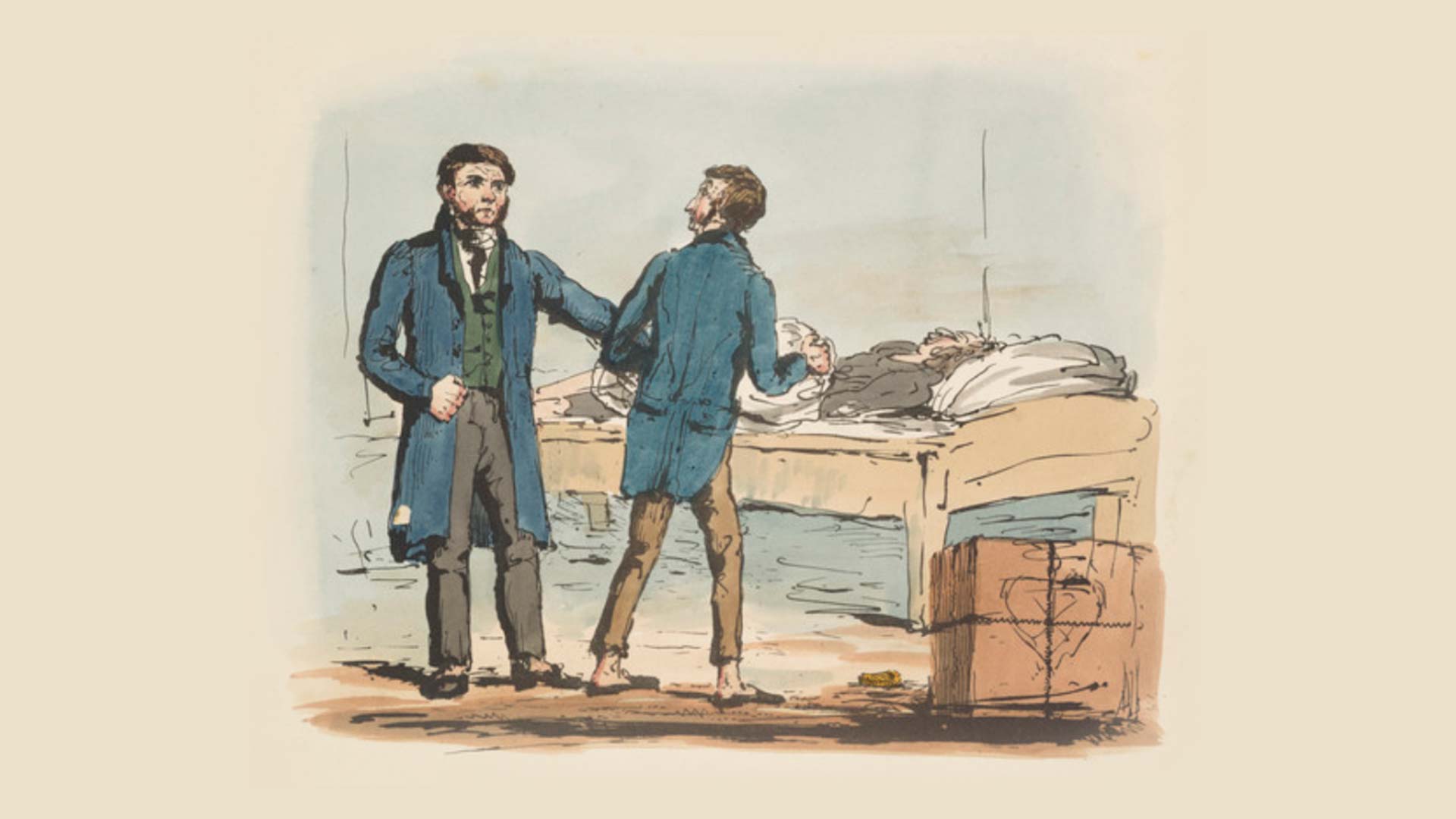
At first, they sold the naturally deceased. Their first corpse fetching £7 10s from Dr Knox’s assistant. Knox made it known that he would gladly accept future specimens should they also find their way to him.
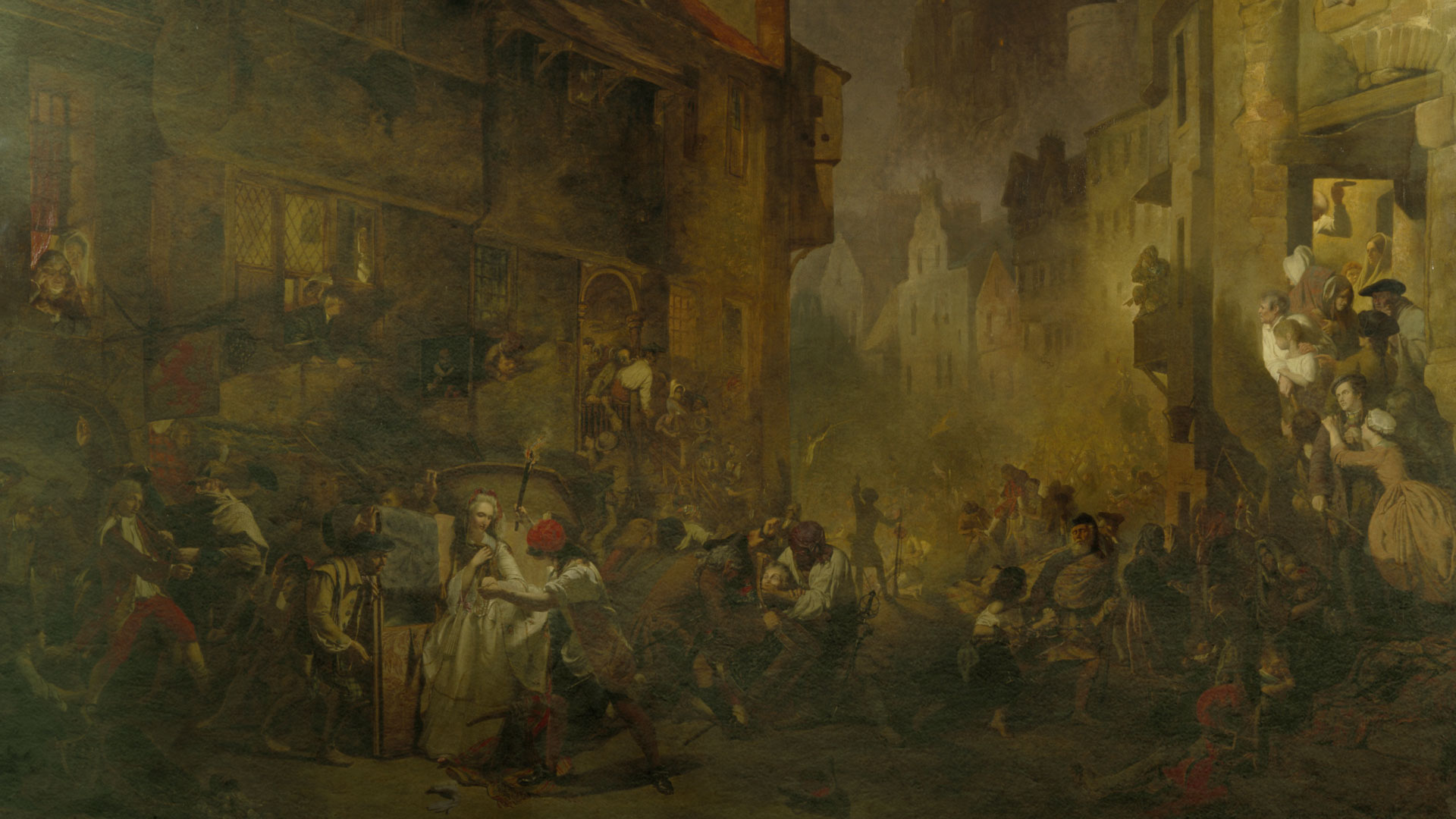
Encouraged by the ease of the transaction, Burke and Hare realised there was money to be made. Over the next 18 months, the pair murdered at least 16 people, targeting the marginalised and vulnerable of the city, smothering the victims and delivering their still-warm corpses directly to Knox’s anatomy rooms.
And still Knox asked few questions, and kept on buying…
Was Dr Robert Knox Guilty?
The question of Knox’s role and guilt has haunted historians for nearly 200 years.
There is no proof that Knox knew the bodies he was eagerly accepting were the victims of murder. And certainly, no suggestion that he had any direct hand in their demise. Burke & Hare had a clever method of suffocation which became known as “Burking” and was virtually undetectable to the forensic science of the time.
But Knox was an intelligent man, and a medical man at that. There is reasonable circumstantial evidence to suggest that Knox suspected the truth but chose to ignore it.
For a start, many of the corpses were unusually fresh – a fact on which Knox himself commented. They had clearly never been buried and some likely did bear some evidence of a violent struggle.
Next, they contained some well-known local faces, identifiable by familiar clothing or distinguishing physical features. One victim, Mary Paterson, was recognised by surprised students who had seen her alive and well just hours earlier.
Knox dismissed their concerns but nevertheless thought it prudent to have his assistants begin removing heads and other identifying features from corpses, suggesting at least some suspicion of foul play.
When Burke and Hare were finally caught in 1828, the full horror of their trade sparked a public outrage. Hare turned king’s evidence. Burke was hanged and dissected publicly
And Dr Robert Knox? He was never charged. But his reputation was utterly destroyed…
Public Fury and Professional Exile
While Knox never formally stood trial, Edinburgh’s court of public opinion passed its judgement and found him decidedly guilty. The people of Edinburgh were furious not only at Burke and Hare, but at the man who had paid them and thereby enabled their crimes.
Knox became a focal point for more general outrage too, both at the scrouge of grave robbery on Edinburgh and broader suspicions of medical men and their dubious intentions.
Mobs gathered outside Knox’s school. His effigy was burned. His students and colleagues gradually abandoned him. The press didn’t hold back either, Knox was accused in Edinburgh’s newspapers of moral corruption and placing the pursuit of science above his own humanity.
Knox eventually left Edinburgh, moving to London where he continued to lecture, though never with the same fame or respect. His later years were marked by bitterness, poverty, and social isolation. Knox died alone and penniless in London in 1862. This once-great medical mind reduced to a footnote in a story of murder.
Dr Knox’s Legacy: Progress Built on Horror
It is uncomfortable to admit, but modern anatomy advanced because of men like Knox. His methods, techniques, and insistence on hands-on learning helped to shape future generations of surgeons.
Yet that progress came at a considerable moral cost. The Burke and Hare murders forced Parliament to confront the horrors of the body trade. The result, in part, was the 1832 Anatomy Act, which allowed unclaimed bodies from workhouses and hospitals to be used legally for dissection. With this, grave robbing declined along with any incentive for anatomy murder.
Was Knox a Villain or a Product of His Time?
This is where the story becomes even more unsettling...
While Knox’s conscience was likely blinded by ambition, and his silence clearly aided and abetted two of Britain’s most infamous murderers, he himself was no killer.
Not only that, but his contribution to medical science was considerable. Who knows how many benefit today from surgical advances he initiated? It’s possible that his work has saved far more lives than Burke & Hare ever stole.
Then there’s the bigger question of what happens in this story without Knox? Burke & Hare were not originally seeking Robert Knox as a customer for their gruesome wares, but rather Dr Munro of Edinburgh University. It’s plausible that without Knox, the pair may have found any number of other willing clients whose custom would have perpetuated their grisly trade in any case.
Knox was clearly a man of his time - an era in which the poor were disposable, where some saw the dead as commodities, and where the rules of ethical science were still being written. Knox stands at this crossroads of progress and atrocity which, with hindsight, makes him somewhat harder to judge.
Why Dr Robert Knox Still Matters
We remember Knox not just because of the infamy and sensationalism of Burke & Hare but because his story forces us to ask uncomfortable questions that are still relevant today, from developments in artificial intelligence to genetic science,
Questions such as how far should science go in the pursuit of knowledge? How easily can ambition silence morality? and who pays the price for scientific progress?
Visiting the World of Dr Knox Today
Today, Dr Robert Knox lives on in the ghostly world of Edinburgh’s dark history tours and attractions including ‘A Trail of Burke & Hare’ – Edinburgh's outdoor escape room that takes you through the real locations from the period - from the scene of the grisly murders to the haunting site of Knox’s old anatomy school.
Or for an even more immersive experience try ‘The Anatomist’ our award-winning escape room set at the height of Edinburgh’s grave robbing past. Dare you enter the basement study of a fictional figure partly inspired by Knox himself?
Or simply take a walk through Edinburgh’s cobbled streets after dark and imagine the footsteps of Knox’s students hurrying through the mist to a lecture… and the distant rattle of hidden carts carrying his grim deliveries.