The Porteous Riot of 1736: When Edinburgh Took Justice Into Its Own Hands

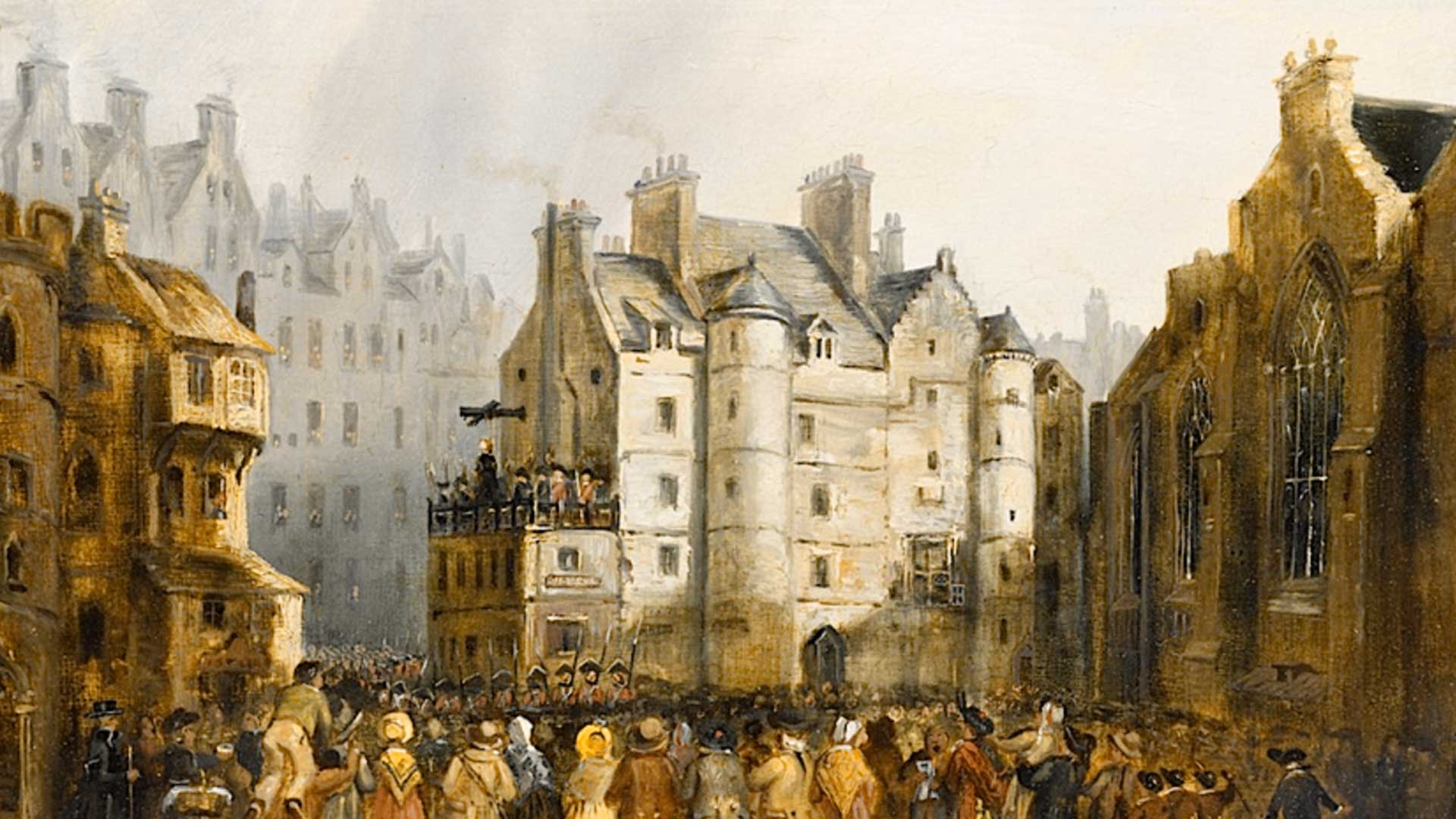
On the night of 7th September 1736, a disciplined and determined mob of thousands stormed Edinburgh's most notorious prison - The Tolbooth, dragged a man from his cell, and hanged him in the Grassmarket.
The man they killed was Captain John Porteous, former head of the Edinburgh City Guard, incarcerated for the killing of civilians just months earlier. The mob who lynched him acted with such organisation, such restraint in all areas except towards their target, that historians have puzzled over who really orchestrated the whole affair for nearly three centuries.
Immortalised by Sir Walter Scott in his novel The Heart of Midlothian, The Porteous Riot was not random mob violence but rather a statement about justice, about Scotland's relationship with the British government, and about what happens when the powerful are seen to escape the consequences of their actions.
Background: Smugglers, Union & Simmering Resentment
To understand what happened in 1736, you have to understand the mood in Edinburgh in the decades following the Acts of Union in 1707. The Union between England and Scotland had brought promises of economic benefit, but what many Scots experienced in reality was a sharp increase in taxes, particularly excise duties on goods like salt, malt, and linen. In this climate, those who defied the tax collectors seen less as criminals and more as popular folk heroes.
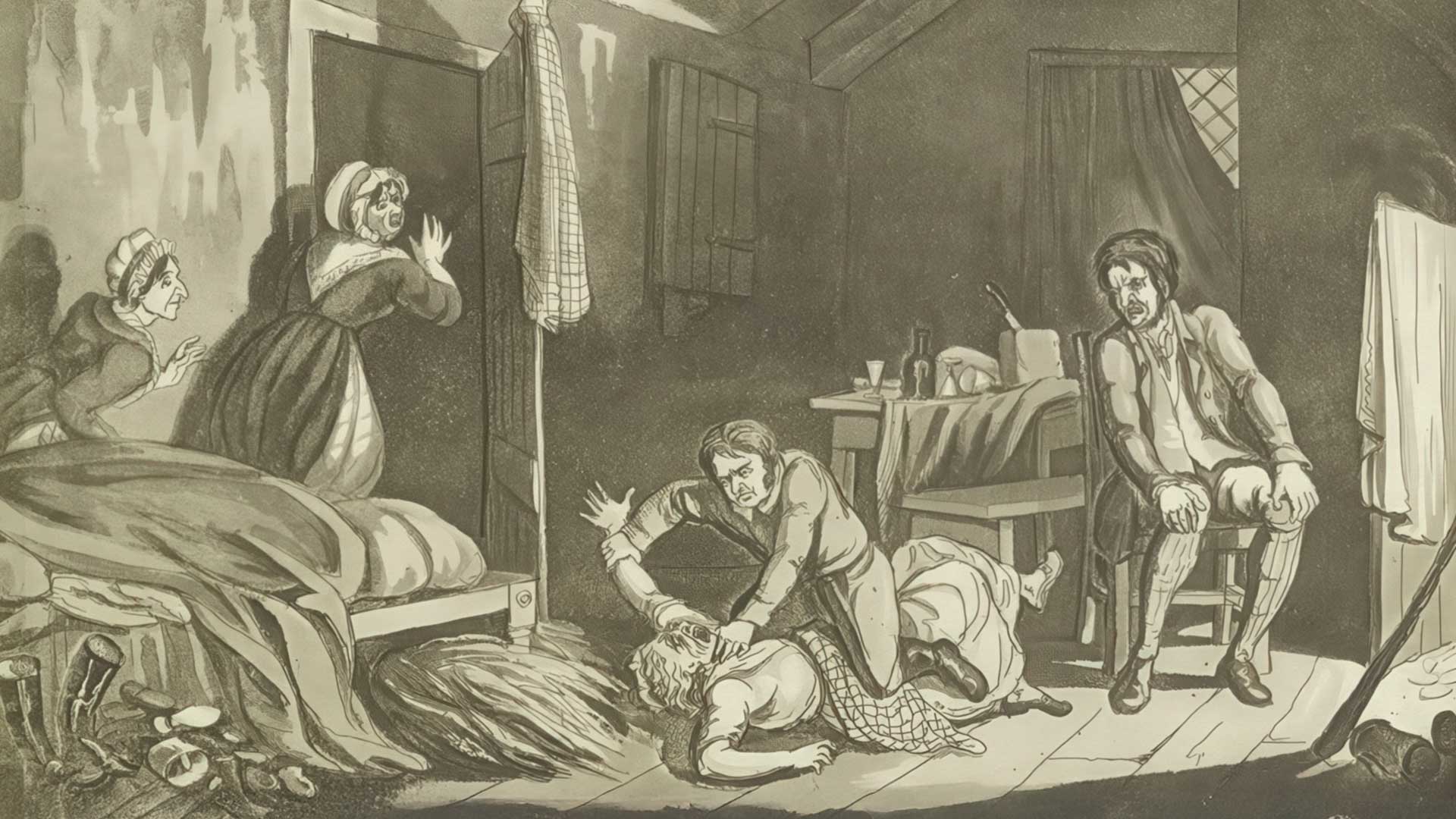
In January 1736, three Scottish smugglers, Andrew Wilson, William Hall, and George Robertson, were arrested after attempting to rob an excise officer in Fife. To many ordinary Scots, especially in a climate of hostility toward excise taxes, smuggling carried an air of patriotic defiance rather than outright criminality. Wilson in particular had a reputation as a loyal, principled man. When the opportunity arose for both he and Robertson to escape from the Tolbooth Prison, Wilson seized two guards by force, holding them with his hands and one in his teeth, to give Robertson time to flee. Robertson escaped. Wilson did not. That act of self-sacrifice cemented Wilson's status as a folk hero, and set the stage for everything that followed.
The Execution of Andrew Wilson
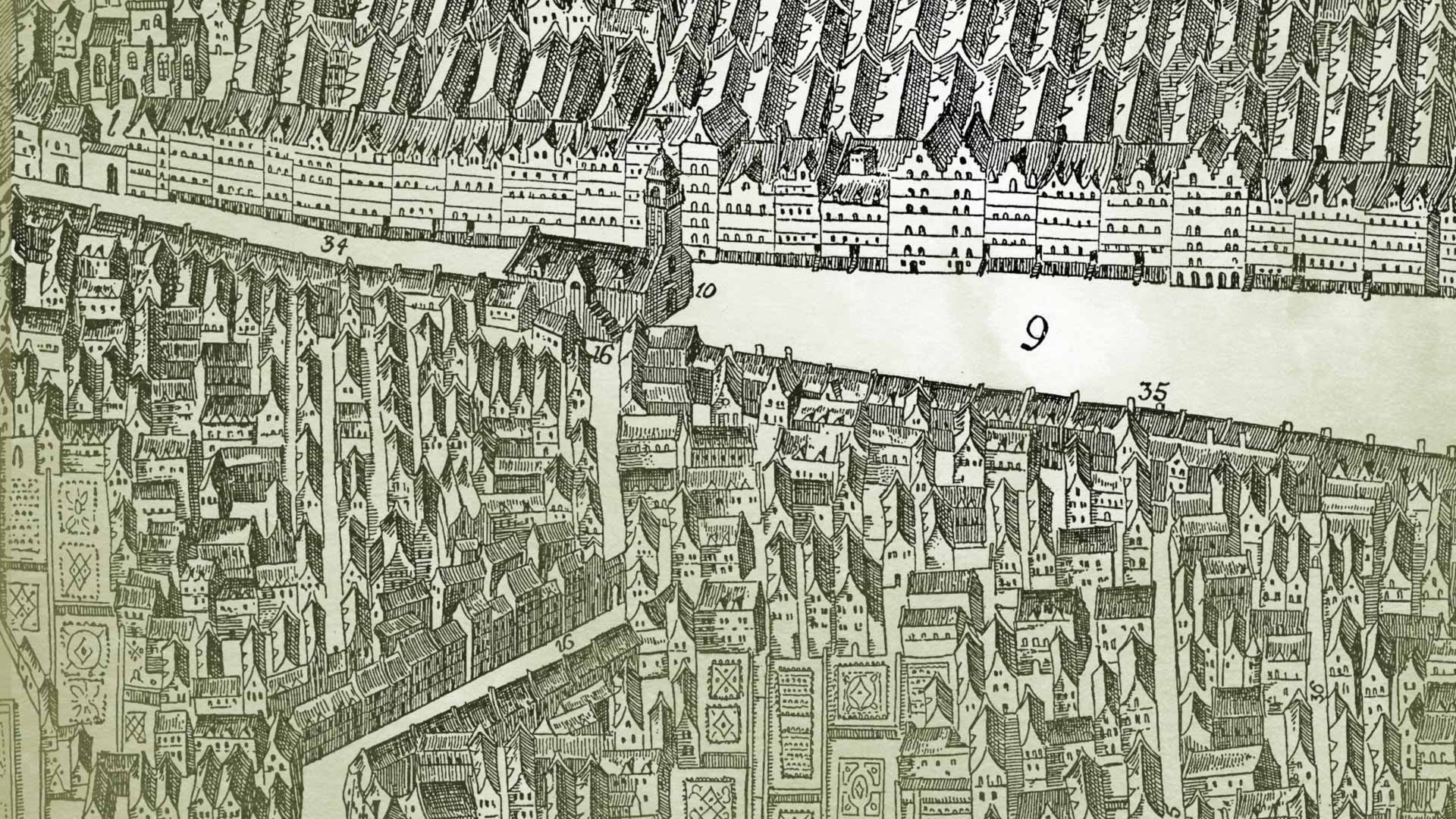
Andrew Wilson was publicly hanged in the Grassmarket on 14th April 1736, before a vast and restless crowd. The execution of a popular man who had helped a friend escape at the cost of his own life was always going to provoke a reaction and the City Guard, under the command of Captain John Porteous, was out in force to maintain order.
As Wilson's body was cut down, the crowd surged and stones began to fly. Porteous, an overbearing and widely disliked figure even before this day, ordered his men to fire above the heads of the crowd. But in the confined space of the Grassmarket, surrounded by the tall tenements of Edinburgh's Old Town, warning shots hit and killed people watching from their windows. The situation deteriorated rapidly and a riot ensued. Porteous ordered his men to fire at the baying mob below. Six people were killed and around a dozen more wounded.
Porteous and his men fled to the City Guardhouse on the Royal Mile but The Lord Provost issued a warrant to have Porteous arrested, and the city demanded justice.
Porteous' Trial, Conviction & Reprieve
At his trial in July 1736, the jury unanimously found Captain Porteous guilty of murder for his reckless conduct. He was sentenced to hang in the Grassmarket on 8th September 1736, fittingly, at the same spot where his victims had fallen. Edinburgh waited, satisfied that justice was taking its course.
Then came the intervention from London that would tip the city into fury. Queen Caroline, acting as regent in the absence of King George II, granted Porteous a six-week reprieve pending a formal review. The message from Westminster was unmistakable: the British government was not prepared to see one of its officials hanged at the demand of a provincial Edinburgh crowd. The administration, already deeply unpopular in Scotland, had gravely miscalculated the depth of feeling up north.
Word spread through Edinburgh that Porteous would likely receive a full pardon. The city already simmering with resentment over taxation, political marginalisation, and the perceived injustices of the Union had reached its breaking point.
The Night of 7th September 1736
The organisation of what followed is one of the most remarkable aspects of the whole affair. On the evening of 7th September, a large mob assembled in the Old Town. Sentries were posted at the city gates to prevent word reaching the military garrison at Edinburgh Castle. The drums of the City Guard were stolen to prevent an alarm being raised. Then, a raiding party broke into the Tolbooth Prison with methodical efficiency.
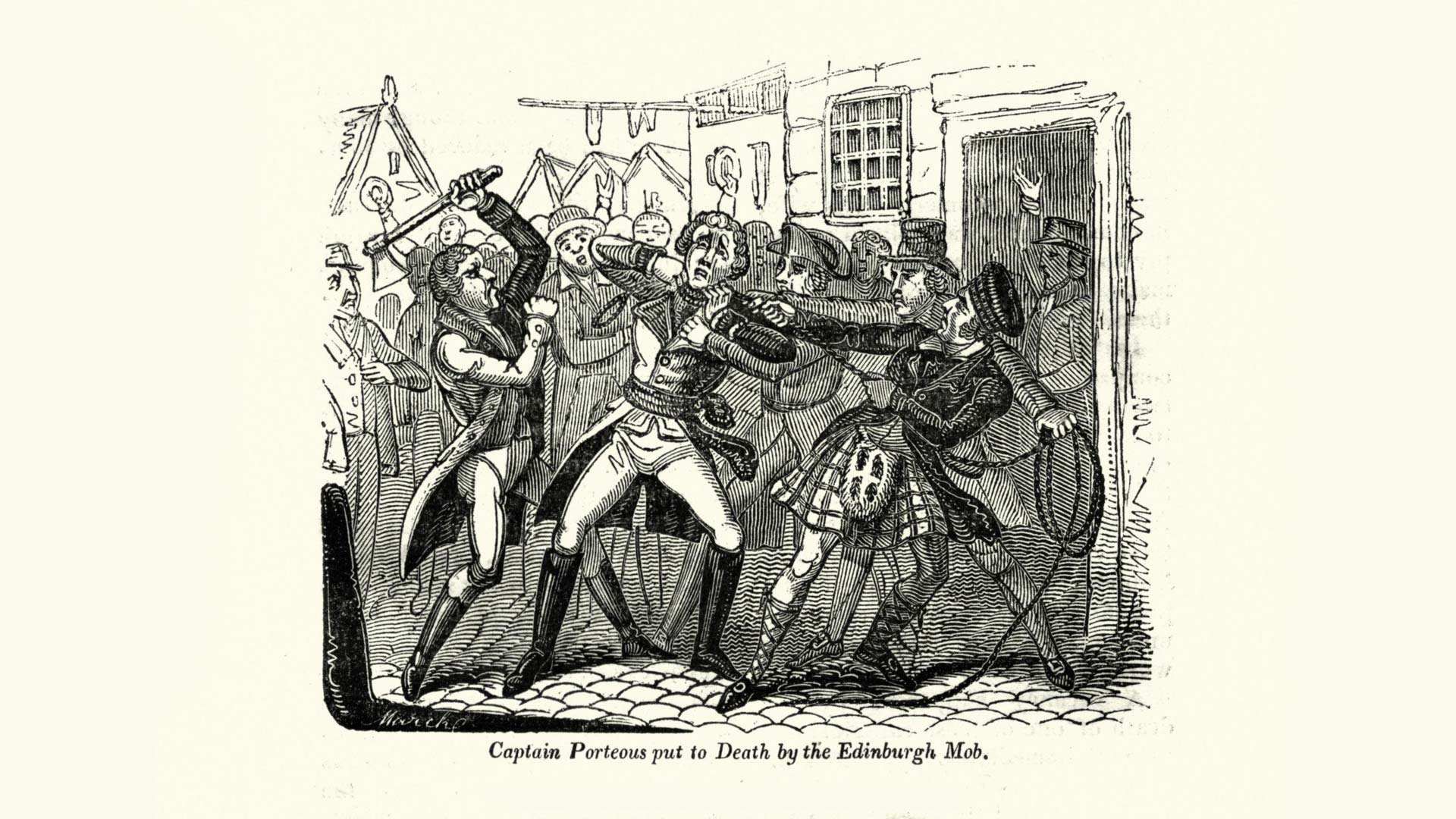
Porteous, who had been warned of the plot, had hidden himself in a chimney flue within his cell. The mob found him and dragged him out into the night to be paraded down The Royal Mile to the Lawnmarket, down the West Bow, and into the Grassmarket.
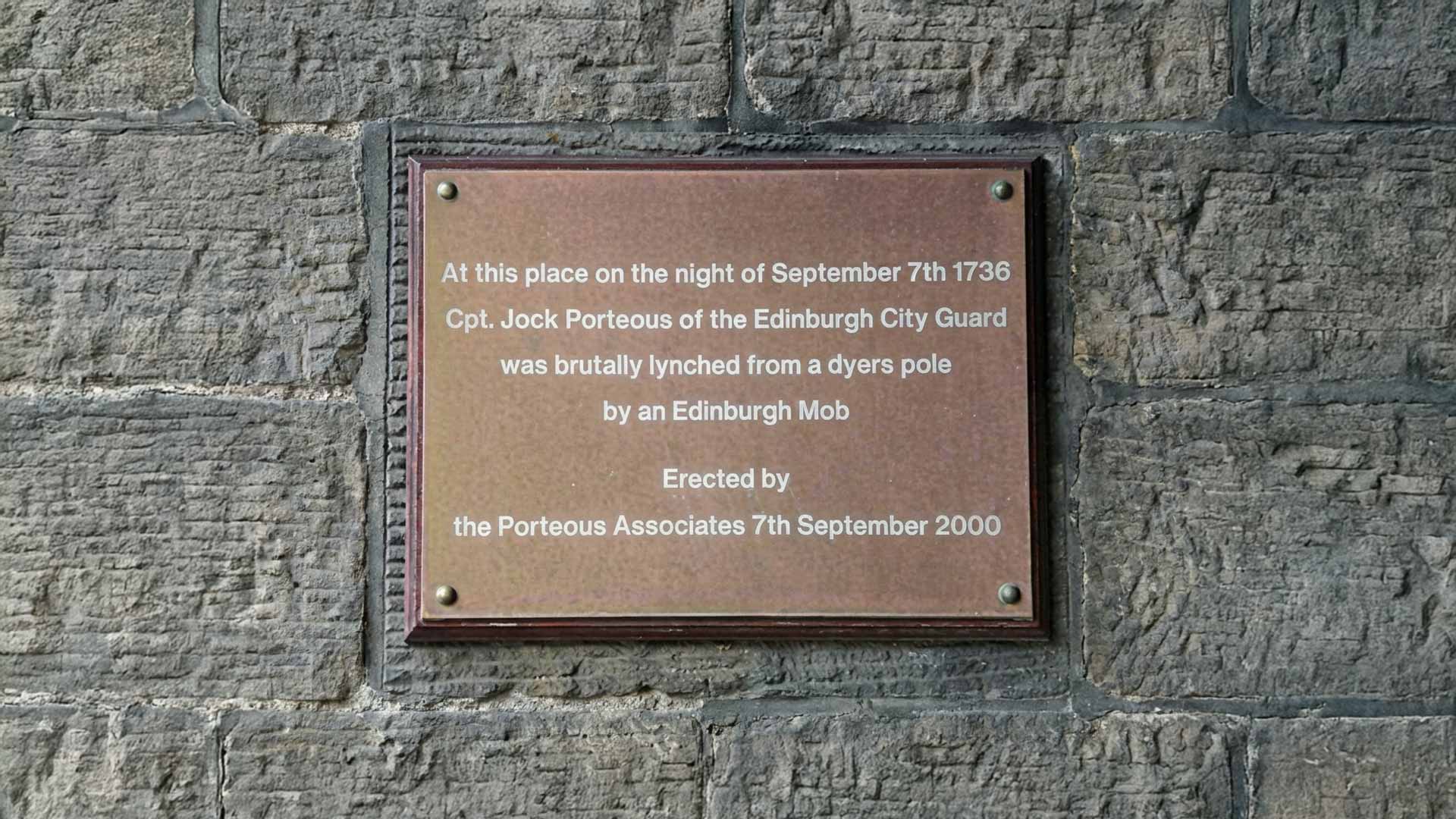
Porteous was hanged from a dyer's pole in Hunter's Close, just off the Grassmarket, using a rope the mob had taken from a nearby shop (leaving payment behind to compensate the absent shopkeeper). By midnight, Captain John Porteous was dead. The mob dispersed into the night as efficiently as it had assembled.
His body was recovered by the City Guard in the early hours and laterburied in Greyfriars Kirkyard, his grave marked for over two hundred years by nothing but a small stone carved with the single letter 'P' and the date 1736. A proper headstone was eventually added nearly two and a half centuries after his death.
The Aftermath: Edinburgh vs. Westminster
The British government's response was furious. Large rewards were offered for information about the ringleaders of the mob but nobody came forward. There was widespread suspicion that persons of high standing had been involved in the conspiracy. It was whispered that a nobleman had been among the disguised mob, and that some of the organising may have reached into Edinburgh's civic establishment. Some even suspected Jacobite sympathisers of using the event to embarrass and destabilise the Hanoverian government. Despite these murmourings, noone was ever convicted.
The Parliamentary inquiry that followed resulted in punitive measures against Edinburgh: a fine of £2,000 to be paid to Porteous's widow, and the disqualification of the Lord Provost from public office. These penalties were significantly reduced from the far harsher punishments initially proposed, largely because Scottish sympathy for the rioters was so overwhelming, stretching to the clergy, many of whom refused to read official proclamations from their pulpits. The british government feared overplaying its hand.
Sir Walter Scott and the Legacy of the Porteous Riot
The enduring cultural legacy of the Porteous Riot owes much to Sir Walter Scott, who made it the dramatic backdrop for the opening chapters of The Heart of Midlothian, published in 1818. Scott's account, though fictionalised, captured something essential about the event: that it was not simply a lynching, but a statement of identity a moment when Edinburgh refused to accept external interference in Scottish justice.
Scott attended the demolition of the Tolbooth prison himself and salvaged its iron entrance door, which he incorporated into his mansion at Abbotsford House in the Scottish Borders where it can still be seen today. The title of his novel gave the Tolbooth its enduring nickname, and inspired the heart-shaped arrangement of paving stones that still marks the prison's former entrance on the Royal Mile.
The Porteous Riot was not a chaotic outburst but a collective act carried out with discipline, purpose, and near-total public sympathy. The Edinburgh mob did what the British state could not prevent: it seized control of justice for a single night and ensured that the will of the city could not simply be overruled from London.In the centuries that followed, the riot became part of Edinburgh’s identity, a story of resistance, civic pride, and deep suspicion of distant authority.
That legacy survives not only in books like The Heart of Midlothian, but in the physical fabric of the city itself: the Heart of Midlothian mosaic on the Royal Mile, Hunter’s Close in the Grassmarket, and the shadow of the old Tolbooth prison beneath modern Edinburgh’s streets. To walk these places today is to walk through one of the defining moments in the making of Edinburgh’s modern character as a city shaped as much by defiance and public memory as by kings, castles, and parliaments.
Where to See the Story Today
The Porteous Riot left its mark all over Edinburgh's Old Town, with much of it is still visible. A plaque inside Hunter's Close, off the Grassmarket, marks the exact spot where Porteous was lynched. The Heart of Midlothian the granite mosaic marks the point at which he was imprisoned. And his final resting place in Greyfriars Kirkyard, one of Edinburgh's most visited burial grounds.
If you want to experience Edinburgh's dark history in the most immersive way possible — to feel the weight of these real events in the very places they happened — Escape The Past's City Trails and historical escape rooms bring Edinburgh's past to life in a way that no museum exhibit quite can. The city's history is extraordinary. All you have to do is step inside it.